
Which Airway-Clearance Method Is Right for Chronic Phlegm?
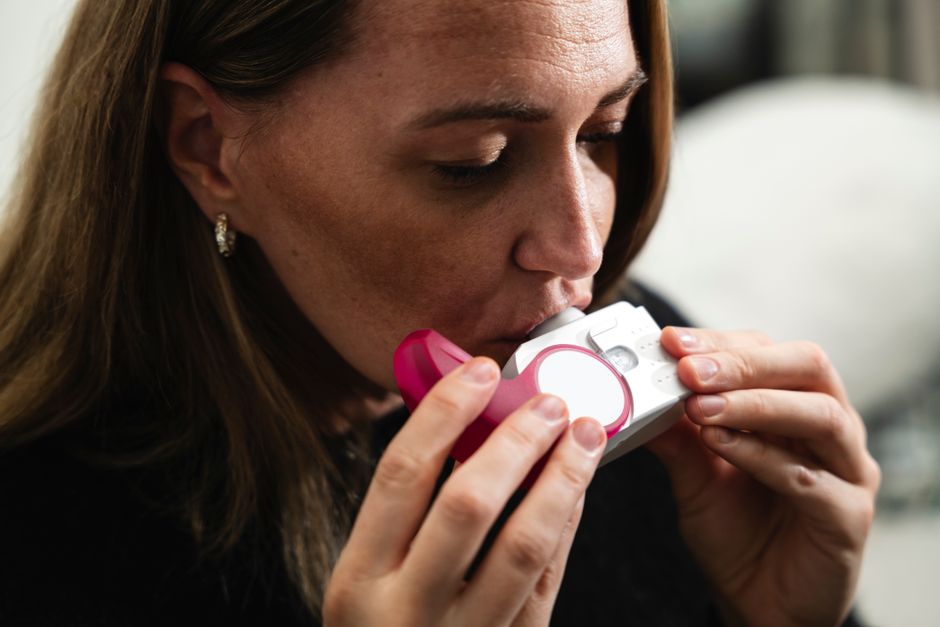
For chronic phlegm from bronchiectasis, COPD, or chronic bronchitis, the most suitable airway-clearance method is the one a respiratory physiotherapist can match to your mucus, breathing limits, cough strength, mobility, and preferences. Evidence supports huff coughing, PEP or oscillating PEP devices, saline, drainage positions, and vests in selected situations, but no single technique has proved superior for everyone.
That last point matters. Device marketing can make this sound like a shopping decision, when it is really a technique-and-fit decision. The European Respiratory Society (ERS) 2025 bronchiectasis guideline makes a strong recommendation that people be taught airway-clearance techniques, but it also says treatment should be personalized because the evidence does not identify one winning method.
Do Aerobika and Acapella devices actually help clear mucus?
Yes, Aerobika and Acapella can help some people clear mucus, but the evidence supports them as useful options rather than guaranteed solutions. Both are oscillating positive expiratory pressure, or OPEP, devices: exhaling through the device combines back-pressure with vibration intended to move secretions toward a cough.
A 2020 Thorax systematic review of eight eligible COPD studies found low-grade evidence associating OPEP use with fewer symptoms and exacerbations, with an odds ratio of 0.37. The same 2020 review associated OPEP use with a 49.8-metre improvement in six-minute walk distance, but most studies were short and had a high risk of bias. Useful signal, modest certainty.
For bronchiectasis, the ERS expert statement reviewed 30 randomized trials and concluded that airway-clearance interventions increase sputum clearance during or after treatment, reduce cough impact and exacerbation risk, and improve health-related quality of life. It does not say an Aerobika or Acapella is inherently better than active-cycle breathing, drainage, or another approach.
The practical test is not which device has the most persuasive brochure. It is whether the method can be learned correctly, tolerated during breathlessness, used consistently, and followed by an effective cough or huff. A respiratory therapist can observe the part no product comparison can show: whether mucus is actually moving.
Which mucus-clearing device is best for COPD or bronchiectasis?
No mucus-clearing device is best for every person with COPD or bronchiectasis; the better choice is the method that fits the diagnosis, secretions, physical ability, and instruction available. COPD-X lists active-cycle breathing, PEP, OPEP devices such as Flutter, Acapella, and Aerobika, autogenic drainage, and conventional physiotherapy including postural drainage, percussion, vibration, huffing, and coughing.
That is not an evasive answer. It is the evidence-based one. The 2025 ERS guideline reports that airway-clearance techniques increased 24-hour sputum volume by 6.2 mL and reduced breathlessness by 1.36 points on the mMRC scale in its cited meta-analysis, while still concluding that no one technique has demonstrated superiority.
| Option | What it may suit | Question for the clinician or therapist |
|---|---|---|
| Huff coughing or active-cycle breathing | People able to learn a breathing pattern without equipment | Can the cough be timed well enough to clear moved mucus? |
| PEP or OPEP handheld device | People who can manage a mouthpiece and repeated controlled exhalations | Does the resistance and technique remain comfortable during breathlessness? |
| Nebulized saline with clearance work | People whose secretions may benefit from hydration, under a prescribed plan | Has tolerance been tested, especially if wheeze or severe airflow limitation is present? |
| Postural drainage or percussion | People who can safely use positions or have assistance | Are positioning, comfort, and mobility practical at home? |
| Chest physiotherapy vest | People for whom a hands-on or handheld method is impractical or ineffective | What specific limitation is the vest intended to address? |
COPD-X specifically says selection should account for airflow limitation, breathlessness, sputum volume and consistency, bronchiectasis, cognitive status, acceptability, therapist expertise, availability, and cost. That checklist is more valuable than a universal ranking. It also helps prevent spending energy on a method that does not fit daily life.
Should I use a PEP device before or after nebulized saline?
Airway-clearance techniques are generally introduced before mucoactive therapy, according to the 2025 ERS bronchiectasis guideline, because this sequence is intended to maximize treatment effectiveness. The exact session order and any medication-related steps still need to follow the plan set by the prescribing clinician and respiratory therapist.
Hypertonic saline deserves special care. The 2025 ERS guideline says it can cause wheezing or bronchospasm and recommends a test dose, with bronchodilator pretreatment considered especially for people with asthma or severe airflow limitation. More treatment is not automatically better if it makes breathing tighter.
A useful clinician discussion is deliberately ordinary: What is the diagnosis? Is the mucus thick, frequent, or difficult to cough out? Can the person sit, change position, hold a device, and produce a huff? Does a nebulized treatment cause cough relief, wheeze, or distress? Those answers turn a generic routine into a safer one.
Airway clearance is also separate from unsupported “detox” claims. For a clear explanation of what evidence does and does not support, see Do Lung Detox Supplements Actually Work After Smoking, Vaping, or Pollution Exposure?.
Why can I feel chest congestion but still cannot cough mucus up?
Chest congestion can persist even when mucus will not come up because mucus movement and mucus expulsion are different jobs. Bronchiectasis sputum is abnormally hyper-concentrated, or dehydrated, according to the ERS expert statement, and its concentration is related to disease severity; a cough may therefore feel unproductive even when secretions are present.
Technique can also be the limiting factor. PEP, OPEP, drainage, and breathing exercises may help mobilize secretions, but a huff or cough is still needed to bring them out. Breathlessness, fatigue, pain, weak cough, poor positioning, or an ill-fitting technique can interrupt that last step. This is precisely why the 2025 ERS guideline says airway clearance is best taught by an experienced respiratory physiotherapist.
Do not treat a noticeable change as merely a technique failure. ERS research describes bronchiectasis exacerbations as deterioration in at least three symptoms for 48 hours or more with a clinician decision to change treatment; the symptoms include cough, sputum volume or consistency, sputum purulence, breathlessness or exercise intolerance, fatigue or malaise, and haemoptysis. Increasing breathlessness, fever, blood in sputum, or suspected infection need urgent clinical assessment.
The process is straightforward: bring a short record of mucus changes, cough effectiveness, wheeze, breathlessness, and what methods were attempted to a respiratory clinician or therapist. Then practice the chosen technique under observation. That is a more reliable next step than chasing a universal best device.
Frequently Asked Questions
When is a chest physiotherapy vest more appropriate than a handheld device?
A vest may be worth discussing when a person cannot comfortably or effectively use a handheld method because of mobility, cough strength, breathlessness, coordination, or other practical barriers. The available sources do not establish a vest as superior to handheld techniques; ERS and COPD-X instead emphasize individualized selection and trained assessment.
Can hypertonic saline irritate my lungs or make me wheeze?
Yes. The 2025 ERS bronchiectasis guideline reports that nebulized hypertonic saline can cause wheezing or bronchospasm, particularly in people with asthma or severe airflow limitation. It recommends a test dose and considers bronchodilator pretreatment, which is why the sequence and setup should be agreed with a clinician.
When should mucus changes be assessed urgently by a clinician?
Increasing breathlessness, fever, blood in sputum, or a suspected infection should be assessed urgently by a clinician. ERS trial criteria describe an exacerbation as deterioration in at least three symptoms for 48 hours or more plus a clinician decision to change treatment; listed symptoms include worsening cough, sputum amount or consistency, purulence, breathlessness, fatigue, and haemoptysis.
Sources
- European Respiratory Society: 2025 guideline for managing adult bronchiectasis
- European Respiratory Society: Airway clearance techniques in bronchiectasis expert statement
- Thorax: Oscillating positive expiratory pressure therapy in COPD systematic review
- COPD-X: Chest physiotherapy and airway-clearance techniques
Disclaimer: This article is for general information only and is not medical advice. It is not a substitute for diagnosis or treatment by a qualified healthcare professional. Always speak to your doctor before acting on anything you read here.