
How Do I Use the One-Leg Standing Test After 50?
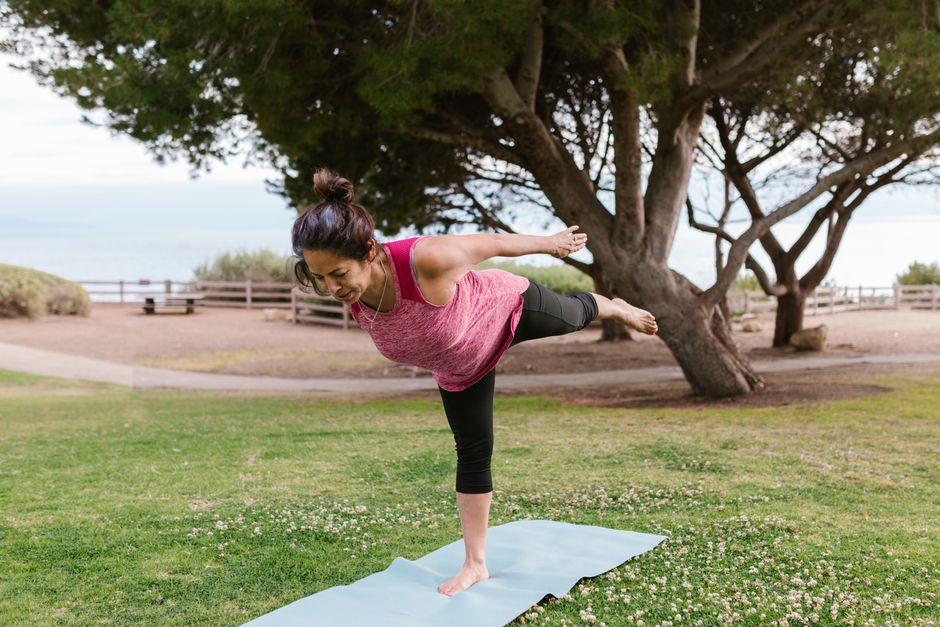
Use the one-leg standing test as a repeatable snapshot, not a diagnosis: stand near support with eyes open, time each side for up to 30 seconds, take 2 or 3 attempts, and record the best result. Research in adults 60 and older shows that age-group averages decline with age, but a recent drop, dizziness, numb feet, pain, falls, or a pronounced new side-to-side difference matters more than one comparison with an average.
There is an important limitation for adults in their 50s: the supplied age-reference research begins at age 60, so it does not provide a verified benchmark for ages 50 to 59. That missing benchmark is not a reason to ignore the test. It is a reason to use a consistent personal baseline rather than pretend one number can grade every adult.
How long should I be able to stand on one leg for my age?
For adults age 60 and older, published averages are useful context, but they are not a universal pass-or-fail line. A 2006 descriptive meta-analysis of 22 studies involving 3,484 adults ages 60 to 99 reported eyes-open mean single-leg-stance times of 27.0 seconds for ages 60 to 69, 17.2 seconds for ages 70 to 79, and 8.5 seconds for ages 80 to 99.
| Age group studied | Mean eyes-open time | Source |
|---|---|---|
| 60-69 | 27.0 seconds | University of Connecticut meta-analysis, 2006 |
| 70-79 | 17.2 seconds | University of Connecticut meta-analysis, 2006 |
| 80-99 | 8.5 seconds | University of Connecticut meta-analysis, 2006 |
The same 2006 review is also the reason not to treat that table like a report card. The underlying studies varied in footwear, allowed from 1 to 5 trials, and used maximum times from 30 to 60 seconds when they stated a cap. Different rules produce numbers that look comparable but are not quite the same measurement.
A cleaner home method comes from the University of British Columbia's 2024 single-leg-stance protocol: use eyes open; start timing when the foot leaves the floor; stop when the raised foot returns, the legs touch, substantial trunk or upper-body movement occurs, or the arms move to recover balance. Allow 2 or 3 attempts, record the best time, cap the test at 30 seconds, then repeat on the other side.
Set up beside a sturdy counter or another stable support so stopping is easy. Keep the same footwear, cap, attempt count, and stopping rules each time. The practical comparison is not your score versus a stranger's average. It is your score today versus your own result under the same conditions.
Does failing a one-leg balance test mean I am at risk of falling?
No: a poor one-leg result can flag a reason to look closer, but it cannot determine whether a person will fall. In a 1997 Journal of the American Geriatrics Society cohort study of 316 healthy, community-living adults older than 60, participants unable to stand unassisted for 5 seconds had an injurious-fall relative risk of 2.13 over 3 years; the study also concluded that no single factor was accurate enough to serve as the sole predictor.
That distinction matters. In the same 1997 study, 84.5% of participants completed the 5-second task at baseline, while 71% had a fall and 22% had an injurious fall during follow-up. A five-second result identifies one signal in a crowded picture, not a forecast.
A 2021 systematic review in Physical Therapy reached the same cautious conclusion after screening 1,071 studies and including 21 studies of balance tests for adults age 60 and older. For any fall among community-dwelling older adults, single-leg stance had sensitivity of 0.51 and specificity of 0.61; the reviewers found no individual clinical balance test consistently identified future fallers across settings and populations.
What changes the picture is context. The CDC's 2024 STEADI materials identify prior falls, unsteadiness while walking, using a cane or walker, and holding furniture while walking as concerns worth raising in a fall-risk discussion. Numbness or loss of feeling in the feet, along with medicines that cause light-headedness or tiredness, can also contribute to stumbles and falls.
Stop the test whenever it feels unsafe. The CDC's 2024 STEADI guidance says testing can stop at any time for safety and supports a physical-therapy referral when a gait, strength, or balance test is failed or discontinued for safety. That is a process decision, not a prediction.
Why is my balance much worse on one side?
A large or newly developing difference between sides is not automatically normal, especially when it comes with pain, weakness, sensory changes, or neurological symptoms. A 2024 study of 52 physically active, healthy adults ages 60 to 80 found no statistically significant right-versus-left or preferred-versus-non-preferred difference in balance control, although measures between legs were strongly correlated across tasks.
That study does not diagnose the cause of an uneven result. It does provide a useful reality check: handedness or a preferred leg is not a complete explanation for a marked new gap in this healthy older-adult sample. Repeat the test with the same setup on both sides first; a one-time wobble is weak evidence, while a repeated pattern is more informative.
Do not test through pain, and do not use repeated practice to talk yourself out of a concerning change. If one side is consistently much worse and there is leg pain, weakness, altered sensation, dizziness, or a recent fall, professional assessment can put the balance result beside gait, strength, medical history, and other relevant factors. For a separate look at exertional leg symptoms, see Why Do I Get Winded and Have Leg Fatigue on Stairs?.
The useful habit is modest: record the date, the setup, the best result for each side, and anything unusual that day. Trends deserve attention. One isolated number deserves humility.
Frequently Asked Questions
Should I test one-leg balance barefoot or wearing shoes?
The research summaries provided do not establish one universally correct footwear choice; studies in the 2006 meta-analysis used different footwear. The more useful approach is to choose a safe setup and keep footwear consistent whenever results are compared. If footwear makes the test feel unsafe, stop rather than trying to force a comparable number.
How many attempts should I take before recording my result?
The University of British Columbia's 2024 protocol recommends allowing 2 or 3 attempts and recording the best time. Repeating the same number of attempts on both legs and at later check-ins makes the comparison more useful, because published studies have used anywhere from 1 to 5 trials.
When should poor balance be checked by a doctor or physical therapist?
CDC STEADI guidance from 2024 supports stopping when safety is a concern and considering physical-therapy referral after a failed balance, gait, or strength test. Prompt professional discussion is especially sensible after falls, a recent decline, dizziness or faintness, numbness in the feet, pain, weakness, or neurological symptoms.
Sources
- University of Connecticut / Topics in Geriatric Rehabilitation: Single-Limb Stance Meta-Analysis
- Journal of the American Geriatrics Society: One-Leg Balance and Injurious Falls
- Physical Therapy: Systematic Review of Balance Tests and Falls
- University of British Columbia: Single-Leg Stance Test Protocol
- Centers for Disease Control and Prevention: STEADI Telehealth Guide
- PubMed: Balance Asymmetry Study in Healthy Older Adults
Disclaimer: This article is for general information only and is not medical advice. It is not a substitute for diagnosis or treatment by a qualified healthcare professional. Always speak to your doctor before acting on anything you read here.