
Which Is Better for Balance: Tai Chi, Walking, or Strength Training?
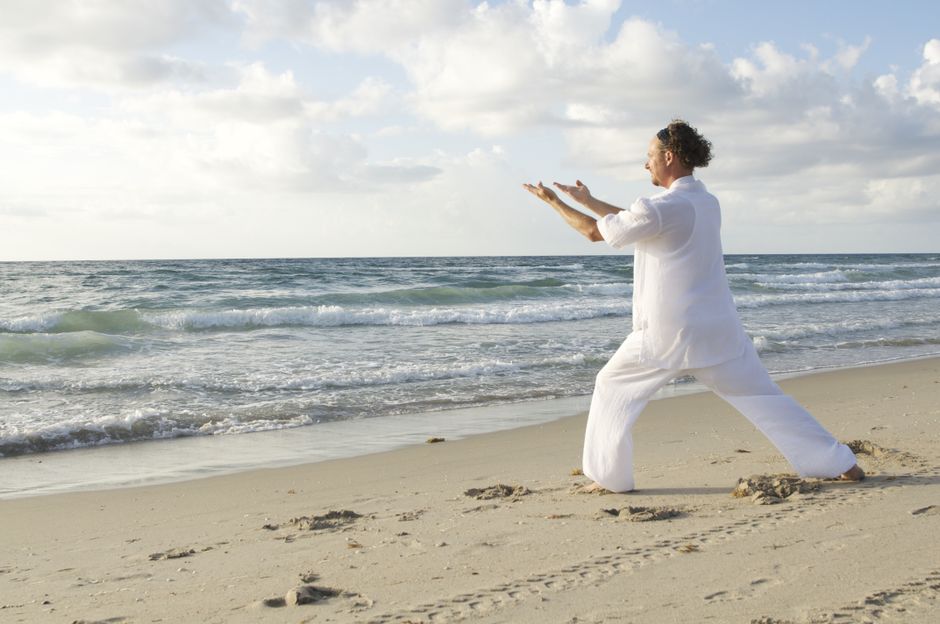
For balance, tai chi, walking, and lower-body strength training work best as a combination rather than as rivals. Tai chi directly practices controlled weight shifts; walking supplies aerobic and gait practice; and strength training supports the leg, back, and abdominal muscles that help steady the body. Federal guidance for older adults favors this multicomponent approach over choosing one exercise alone.
The sensible question is not which activity wins in isolation. It is which gap each activity fills. The 2018 U.S. Department of Health and Human Services Physical Activity Guidelines say multicomponent programs are most successful at reducing falls and injuries. That is the useful frame here: build a routine with a job for each part, then keep it manageable.
Is tai chi the best exercise for balance?
Tai chi is a well-supported balance exercise, but the evidence does not establish it as the best standalone choice for every adult. A 2023 systematic review and meta-analysis in Frontiers in Public Health pooled 24 randomized controlled trials and found that tai chi reduced fall risk versus control conditions, with a risk ratio of 0.76. In plain English, the pooled result favored tai chi, but it does not mean every person gets the same result or that other training can be discarded.
Tai chi earns its place because the movements repeatedly ask the body to shift weight, control position, and coordinate steps. The same 2023 review reported better Timed Up and Go performance and functional-reach performance among participants practicing tai chi. Those are balance-relevant measures, not a promise about an individual's future fall risk.
Strength training answers a different problem. The 2018 federal guidelines identify strengthening the back, abdominal, and leg muscles as a way to improve balance, and they explicitly favor programs combining balance training, aerobic activity, and muscle strengthening. Tai chi practices control. Strength work supports the muscles used to regain control. Neither makes the other unnecessary.
| Activity | Primary role in a balance program | What the evidence says |
|---|---|---|
| Tai chi | Balance, weight shifting, coordination | A 2023 review of 24 trials found lower fall risk versus control conditions. |
| Walking | Aerobic activity and gait practice | The 2018 federal guidelines say low-intensity walking alone does not appear to reduce fall-related injuries and fractures. |
| Muscle strengthening | Leg, back, and abdominal support | The 2018 federal guidelines state that strengthening these muscle groups improves balance. |
The practical takeaway is pleasantly unglamorous: tai chi can be a strong balance component, not a magic exemption from the rest of the program.
Can walking alone improve my balance?
Walking alone can support mobility and aerobic activity, but low-intensity walking alone has not been shown to reduce fall-related injuries and fractures. That distinction comes directly from the 2018 federal guidelines. Walking is still useful; it simply does not train every balance demand on its own.
The CDC recommends that adults age 65 and older accumulate at least 150 minutes of moderate-intensity aerobic activity each week, such as brisk walking, along with muscle-strengthening activity on at least 2 days and activities that improve balance. The recommendation is a weekly pattern, not a contest between modalities. Someone who already walks has a workable base rather than a reason to start from zero.
A 2023 controlled study in PLOS ONE offers a useful, limited example. Healthy women age 60 and older completed 12 weeks of brisk walking plus Yang-style 24-form tai chi, 3 sessions per week. The combined program improved one-legged standing by 2.2 seconds and chair stands by 2.6 repetitions; the study reported no exercise-training injuries. It was a small study of 25 participants in the exercise group, so it cannot settle what walking alone would do for all adults.
That limitation matters. A combined result does not prove that one ingredient caused every improvement. It does show why layering balance practice onto an existing walking habit is more reasonable than assuming walking covers balance automatically.
For adults who find health information relevant to their broader mobility goals, What Is a Safe At-Home Strength and Mobility Routine for Adults Over 65? provides related context on structuring movement at home.
How often should I do tai chi to improve balance?
The research does not provide one universal tai chi schedule, but a structured routine can reasonably pair tai chi or other balance work with walking and strengthening across the week. In the 2023 tai chi review, study programs ranged from 1 to 5 sessions weekly, and benefits increased with longer duration and greater frequency. That is evidence of a pattern, not a guarantee that more is always better for an individual.
A beginner plan can use existing walking time as the anchor. The 2023 PLOS ONE study used 3 combined walking-and-tai-chi sessions weekly over 12 weeks, while the CDC's weekly framework calls for aerobic activity, balance activity, and strengthening on at least 2 days. The schedule below is a way to organize those evidence-based categories rather than a prescription.
| Weekly element | How it fits | Evidence basis |
|---|---|---|
| Brisk walking | Build toward the CDC's 150-minute weekly moderate-intensity target for adults age 65 and older. | CDC guidance, current page. |
| Tai chi or balance practice | Place it beside walking sessions or on separate days, using a repeatable routine. | Programs in the 2023 review ranged from 1 to 5 weekly sessions. |
| Muscle strengthening | Include work on at least 2 days each week as part of the overall routine. | CDC guidance, current page. |
Progress is worth defining before adding complexity. Useful markers include attending planned sessions consistently, feeling more controlled during the chosen movements, or noticing that a standard balance task is less taxing. The studies cited here used measures such as one-legged standing, chair stands, functional reach, and Timed Up and Go performance, but they do not supply a universal home threshold for advancing.
Confidence and mobility set the boundary. For people who have difficulty walking or climbing stairs, the CDC suggests chair or desk exercises. For people with a health condition, the CDC advises working with a clinician on an activity plan matched to their abilities. Public data in these sources does not establish whether a class, video, or independent routine is superior for every person; initial instruction and periodic supervision are features of the home-based programs recommended by the Community Preventive Services Task Force in its 2024 review document.
The next step is process, not a prediction: keep the walking habit, add a balance element you can repeat, and include strengthening rather than asking a single exercise to do three jobs.
Frequently Asked Questions
Do I need leg strength training as well as balance practice?
The 2018 U.S. Department of Health and Human Services Physical Activity Guidelines state that strengthening the back, abdominal, and leg muscles improves balance, and they favor programs that combine strength and balance work. The CDC also includes muscle-strengthening activity on at least 2 days each week in its guidance for adults age 65 and older. Strength work does not replace balance practice; it supplies part of the physical capacity that balance practice uses.
Which balance exercise is best for beginners with limited mobility?
There is no single best exercise established by the sources for every beginner with limited mobility. The CDC suggests chair or desk exercises for people who have difficulty walking or climbing stairs, while the CDC's fall-prevention guidance identifies tai chi as one example of exercise that can strengthen legs and improve balance. A clinician can help match an activity plan to a person's abilities when a health condition is involved.
Sources
- Centers for Disease Control and Prevention: Adding Physical Activity as an Older Adult
- U.S. Department of Health and Human Services: Physical Activity Guidelines for Americans, 2nd edition
- Frontiers in Public Health: Tai Chi for Fall Prevention and Balance Improvement in Older Adults
- PLOS ONE: Concurrent Brisk Walking and Taijiquan Study
- Centers for Disease Control and Prevention: Home-Based Exercise Interventions Recommendation
- Centers for Disease Control and Prevention: Fall Prevention
Disclaimer: This article is for general information only and is not medical advice. It is not a substitute for diagnosis or treatment by a qualified healthcare professional. Always speak to your doctor before acting on anything you read here.