How Can I Build Knee Strength Without Making Mild Knee Discomfort Worse?
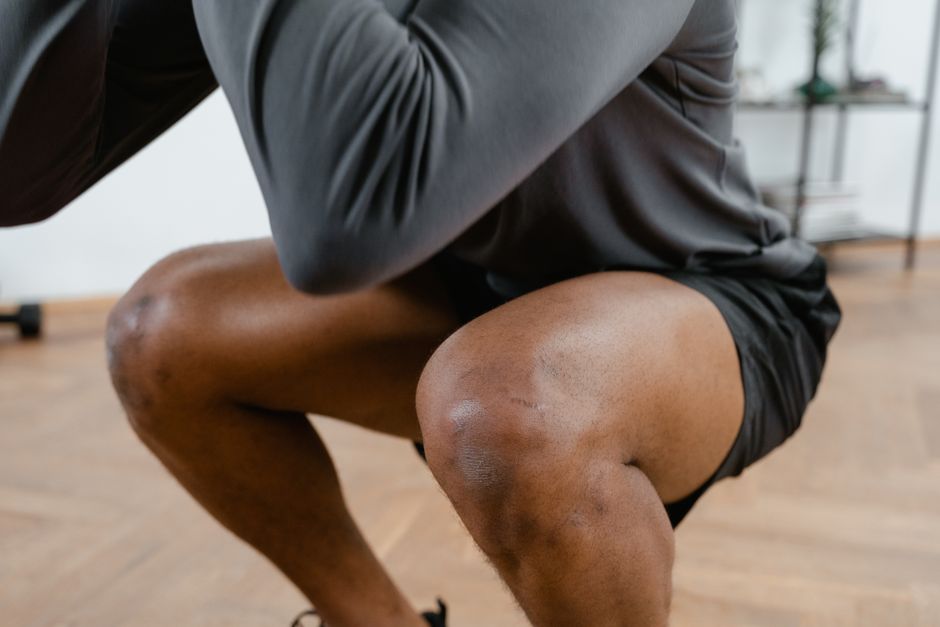
For mild knee discomfort, the cautious route is to begin with low-impact movement and controlled bodyweight exercises that train the quadriceps, hamstrings, hips, glutes, and calves, then add repetitions or load only if symptoms do not increase. Stop any exercise that hurts, rather than trying to push through it, and seek medical assessment for severe pain, major swelling, inability to bear weight, locking, giving way, or fever with a hot red knee.
This is less glamorous than hunting for one perfect exercise. It is also more useful. A 2024 Cochrane review of 139 randomized trials involving 12,468 participants found that land-based exercise probably improves short-term pain, physical function, and quality of life for knee osteoarthritis, although the certainty of that evidence ranged from low to moderate. Exercise is not a promise of a pain-free knee. It is a sensible process for building capacity without pretending symptoms do not matter.
What are the best exercises to strengthen weak knees?
The best starting exercises are usually those that build thigh and hip strength with enough control that knee symptoms do not increase: straight-leg raises, bridges, clamshells, hip abduction work, hamstring curls, wall squats, sit-to-stands, and low step-ups. The American Academy of Orthopaedic Surgeons includes several of these movements in its knee-exercise guidance and emphasizes starting slowly before progressing repetitions or load.
Begin each session with a 5- to 10-minute low-impact warm-up, such as walking or stationary cycling, as outlined in the AAOS knee-conditioning program. That short preparation is not filler. It gives the knee a lower-stakes transition before strength work begins.
| Exercise | What it emphasizes | Beginner-friendly adjustment |
|---|---|---|
| Straight-leg raise | Quadriceps | Keep the movement slow and the knee straight. |
| Bridge or clamshell | Glutes and hip control | Use a smaller, controlled range rather than forcing height. |
| Sit-to-stand or wall squat | Thighs and glutes | Use a higher seat or a shallower bend. |
| Step-up | Thigh, hip, and buttock muscles | Start on the bottom stair and use a handrail if needed. |
For a concrete entry point, AAOS prescribes 3 sets of 10 straight-leg raises, 4 to 5 days per week, in its knee-conditioning program. Versus Arthritis takes an even smaller starting approach for lying straight-leg raises: 5 repetitions per leg every morning and evening. These are not competing rules; they show why starting volume should match tolerance rather than ego.
Can I strengthen my knees if squats hurt?
Yes, knee strength can be built without forcing painful squats, because a squat is one tool rather than the entire toolbox. AAOS states that an exercise that hurts should be stopped; discomfort from challenging muscles or mild next-day stiffness is different from serious pain during the movement.
Change the task before abandoning strength work. A sit-to-stand from a higher chair reduces the depth of knee bend. A wall squat can use a shallower position. A step-up can begin on the bottom stair, with handrail support, before progressing to a higher step, as described by Versus Arthritis. The progression is simple: make the movement manageable first, then change only one variable at a time, such as repetitions, resistance, depth, or step height.
Form matters because ChoosePT lists improper exercise form, weakness in muscles controlling the hip and knee, knee stiffness or osteoarthritis, kneecap positioning, and flat feet among possible contributors to knee pain. Public guidance cannot diagnose which factor explains one person’s symptoms. That is where a physical therapist can be more useful than another round of internet searching.
Which muscles should I strengthen to support my knees?
The priority muscles are the quadriceps, hamstrings, hip abductors, hip adductors, gluteus medius, and gluteus maximus. AAOS identifies these groups in its knee-conditioning program and explains the reason plainly: stronger supporting muscles reduce stress on the knee joint and help it absorb shock.
The quadriceps and hamstrings deserve attention, but stopping there can leave a gap. Hip and glute work helps control the position of the leg during everyday tasks such as rising from a chair or stepping up. Calf work is also a practical inclusion in a balanced lower-body routine, but the research sources provided do not give a specific calf-exercise prescription for mild knee discomfort.
ChoosePT suggests general home-exercise ranges of 1 to 3 sets of 10 to 15 repetitions, performed 1 to 2 times a day for up to 4 days per week. Treat those numbers as a menu, not a dare. If a movement increases pain, ChoosePT says to stop and consult a physical therapist.
When should knee discomfort get medical advice instead of more exercise?
Exercise belongs in the conversation only when the situation is appropriate for it. The NHS advises urgent assessment for very severe knee pain; inability to move the knee or bear weight; a badly swollen or deformed knee; locking or giving way; or fever with knee redness or heat. It also advises non-urgent medical advice when pain has not improved within a few weeks.
For short-term symptom management, the NHS recommends avoiding prolonged weight bearing and using a wrapped cold pack for up to 20 minutes every 2 to 3 hours. Knee pain has many possible causes, so self-diagnosis is a poor substitute for assessment when the pattern is concerning. The same principle of acting early when warning signs appear applies across health concerns, as discussed in How Can I Spot Worsening Heart Failure Before It Becomes an Emergency?.
The practical process is modest: warm up, choose comfortable bodyweight movements, keep notes on symptom response, and progress gradually. Nobody can forecast exactly how one knee will respond. Consistency and a clear stop rule are more useful than bravado.
Frequently Asked Questions
How often should I do knee-strengthening exercises?
The answer depends on the exercise and symptom response. The American Academy of Orthopaedic Surgeons describes a 4- to 6-week conditioning phase before maintenance work 2 to 3 days per week, while ChoosePT gives general home-exercise guidance of 1 to 3 sets of 10 to 15 repetitions, 1 to 2 times daily for up to 4 days per week. Start below the maximum suggested volume and build gradually if knee pain does not increase.
Should I exercise through knee pain or stop?
Stop an exercise that hurts or increases knee pain. AAOS distinguishes muscle challenge or mild next-day stiffness from serious pain during exercise, and ChoosePT advises stopping immediately when an exercise causes or increases pain and consulting a physical therapist. Severe pain, inability to bear weight, locking, giving way, substantial swelling or deformity, and fever with a hot red knee warrant urgent assessment under NHS guidance.
Are step-ups, wall sits, and leg raises good for knee stability?
They can be useful options when they are comfortable and progressed gradually. AAOS includes straight-leg lifts, wall squats, step-ups, hamstring curls, and a stabilization series for the thigh, hip, and buttock muscles; Versus Arthritis also uses step-ups and straight-leg raises. The useful version is the one that does not aggravate symptoms, not the deepest squat or tallest step.
Sources
- American Academy of Orthopaedic Surgeons: Knee Conditioning Program
- American Academy of Orthopaedic Surgeons: Knee Exercises
- American Physical Therapy Association ChoosePT: Five Exercises to Reduce Knee Pain
- Cochrane Database of Systematic Reviews via PubMed: Exercise for Knee Osteoarthritis, 2024
- National Health Service: Knee Pain
- Versus Arthritis: Exercises for the Knees
Disclaimer: This article is for general information only and is not medical advice. It is not a substitute for diagnosis or treatment by a qualified healthcare professional. Always speak to your doctor before acting on anything you read here.