
How Can I Build a High-Protein Vegan Breakfast Without Eggs, Dairy, or Oats?
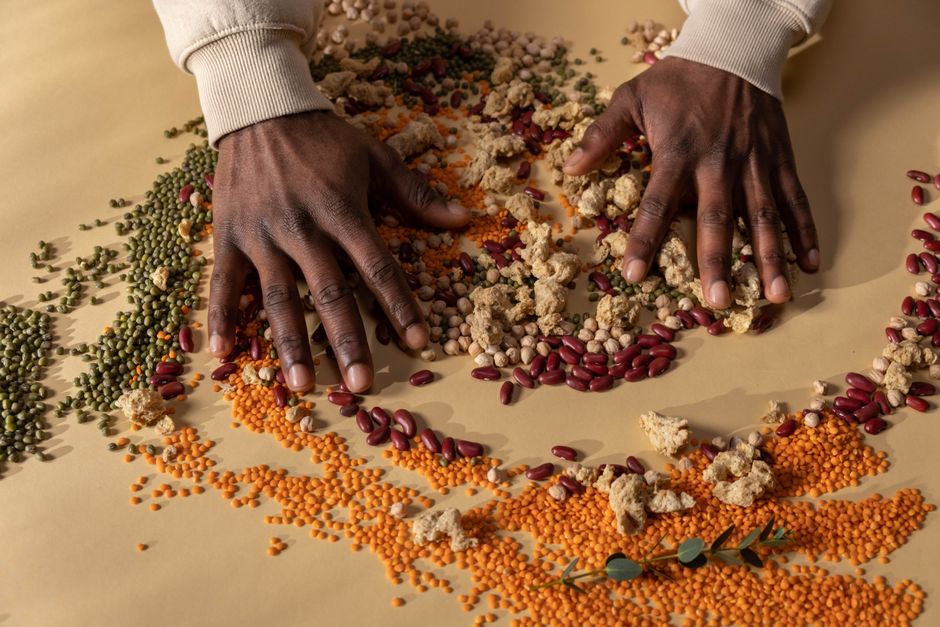
Build a fast high-protein vegan breakfast by combining two or three protein foods instead of depending on one: tofu with beans, fortified soy milk with a seed-based smoothie, or lentils with quinoa. A 20-gram breakfast is 40% of the FDA's 50-gram Daily Value for protein, and a simple formula makes that target practical without eggs, dairy, oats, or protein powder.
The useful shift is not finding a single perfect breakfast food. It is building a small roster that works around the foods you avoid. MedlinePlus states that animal products are not required to obtain all needed protein, and its list of plant options includes soy, beans, legumes, nut butters, and grains such as quinoa. That is the raw material. The rest is assembly.
What can I eat for a high-protein vegan breakfast without oats?
You can build an oat-free vegan breakfast around tofu, beans or lentils, soy milk, seeds, and quinoa. The point is variety: one food supplies the base, another adds protein, and a third can add calcium or iron where a fortified product or tofu provides it.
MedlinePlus lists a quarter-cup serving of tofu as providing 7 grams of protein and identifies a half-cup serving of cooked beans or lentils as a protein-rich food portion. That makes tofu a particularly tidy starting point for a savory plate, while beans or lentils make the meal feel like breakfast rather than a nutrition calculation.
| Breakfast format | Protein-building components | What the evidence supports | Preparation approach |
|---|---|---|---|
| Savory bowl | Tofu, beans or lentils, quinoa | MedlinePlus identifies each category as a plant protein source. | Cook components ahead and reheat together. |
| Smoothie | Fortified soy milk, chia seeds, tofu | NIH lists calcium in fortified soymilk, calcium-set tofu, and chia seeds. | Blend the liquid and chilled ingredients when ready. |
| Portable meal | Tofu cubes, lentils or beans, quinoa | NIH lists tofu, lentils, and kidney beans among iron-containing foods. | Pack portions in advance; no oats required. |
For people trying to move away from restrictive food rules, the better question is often whether a pattern is repeatable. Advisors Search's guide on building a healthy eating pattern without restrictive diet rules explores that broader principle. A breakfast rotation can be plain and still be useful.
How can I get 20 grams of protein at breakfast without eggs or dairy?
A 20-gram breakfast can be built from measured tofu portions alone or from a combination of tofu and other plant foods. Based on MedlinePlus's listed amount of 7 grams per quarter-cup of tofu, three quarter-cup servings supply 21 grams; that is one gram above the target without requiring eggs, dairy, or powder.
The FDA's Daily Value page lists protein at 50 grams for adults and children ages 4 and older, so 20 grams represents 40% of that reference value. It is a label-comparison tool, not a personalized prescription: individual needs vary with factors the supplied sources do not calculate for any one reader.
A less repetitive approach is to let tofu provide a substantial share and add beans, lentils, soy milk, or quinoa. The supplied sources do not provide gram-by-gram protein totals for every possible combination, so package labels remain the honest way to total a specific breakfast. That is not evasive. It is the difference between a usable template and pretend precision.
There is another reason not to make breakfast a one-food project. The NIH Office of Dietary Supplements lists 3 milligrams of iron in a half-cup of firm tofu and 3 milligrams in a half-cup of cooked lentils; its table lists 2 milligrams in a half-cup of canned kidney beans. The same NIH source states that iron requirements are 1.8 times higher for people following vegetarian diets because plant-based nonheme iron is less bioavailable. Protein matters, but it is not the whole plate.
Is tofu a good breakfast protein?
Yes, tofu is a good breakfast protein because it is a measurable plant-protein base that can also contribute iron and, when made with calcium sulfate, calcium. MedlinePlus lists 7 grams of protein per quarter-cup serving, while the NIH calcium fact sheet lists 253 milligrams of calcium in a half-cup of firm tofu made with calcium sulfate.
The protein-quality evidence is reassuring without needing to turn breakfast into a laboratory project. A peer-reviewed 2020 study indexed by PubMed measured 95% true ileal amino-acid digestibility for tofu in its minipig model. The same study reported 92% for soy milk, 94% for pea emulsion, and 97% for seitan. Those results describe protein digestibility in that study, not a guarantee about any person's meal or health outcome.
A second peer-reviewed review, published in 2022 and indexed by PubMed, concluded that most soy products had high protein-quality scores. Tofu does not have to be the entire breakfast. Pairing it with beans, lentils, seeds, or quinoa keeps the menu less monotonous and broadens the foods on the plate.
What plant milk has the most protein?
The supplied research does not provide a protein-gram comparison across every plant milk, so it cannot establish which plant milk has the most protein by brand or category. It does provide strong evidence for soy milk as a substantial option: the 2022 PubMed-indexed review found soymilk had the highest DIAAS among the soy product groups it evaluated.
That distinction matters. “Most protein” is a nutrition-label question, while protein quality is a separate question about the protein itself. The 2020 PubMed-indexed study reported a DIAAS of 117% for soymilk and 97% for tofu in its tested foods, but that does not replace checking the carton for protein, calcium fortification, and ingredients.
For calcium, the NIH Office of Dietary Supplements lists 299 milligrams in one cup of calcium-fortified soymilk. Its fact sheet also notes that many milk substitutes, tofu, and ready-to-eat cereals are calcium-fortified. Labels matter here because fortification changes the comparison. A carton can look similar on the shelf and be nutritionally quite different.
Frequently Asked Questions
What are easy make-ahead vegan breakfasts for busy mornings?
Portable options include a chilled tofu-and-bean breakfast box, a lentil-and-quinoa bowl prepared ahead, or a smoothie kit with soy milk and seeds added when blended. The useful preparation move is to portion more than one protein source, rather than expecting one food to supply the entire breakfast.
Can I make a high-protein breakfast without protein powder?
Yes. MedlinePlus lists tofu, beans, legumes, nut butters, and certain grains such as quinoa among plant protein sources. A breakfast assembled from tofu plus beans or lentils can reach a substantial protein total without powder; three quarter-cup tofu servings alone equal 21 grams using MedlinePlus's listed serving amount.
What should I eat for breakfast if oats make me bloated?
The supplied evidence does not identify why oats cause bloating or diagnose intolerance. Oat-free alternatives include tofu, beans, lentils, quinoa, fortified soy milk, and seed-based additions; a varied breakfast can use these foods without relying on oats.
The practical finish is simple: keep two or three protein bases available, then rotate the format rather than chasing a magic ingredient. Read the label on fortified foods, use the sources' serving information as a starting point, and make a breakfast that fits the foods you can actually eat consistently.
Sources
- MedlinePlus Medical Encyclopedia: Vegetarian Diet
- U.S. Food and Drug Administration: Daily Value on Nutrition and Supplement Facts Labels
- National Institutes of Health Office of Dietary Supplements: Calcium Fact Sheet for Health Professionals
- National Institutes of Health Office of Dietary Supplements: Iron Fact Sheet for Health Professionals
- British Journal of Nutrition study indexed by PubMed
- Food Science & Nutrition review indexed by PubMed
Disclaimer: This article is for general information only and is not medical advice. It is not a substitute for diagnosis or treatment by a qualified healthcare professional. Always speak to your doctor before acting on anything you read here.